Counter-terrorism and counter-intelligence in the field: handlers and dogs work as one!
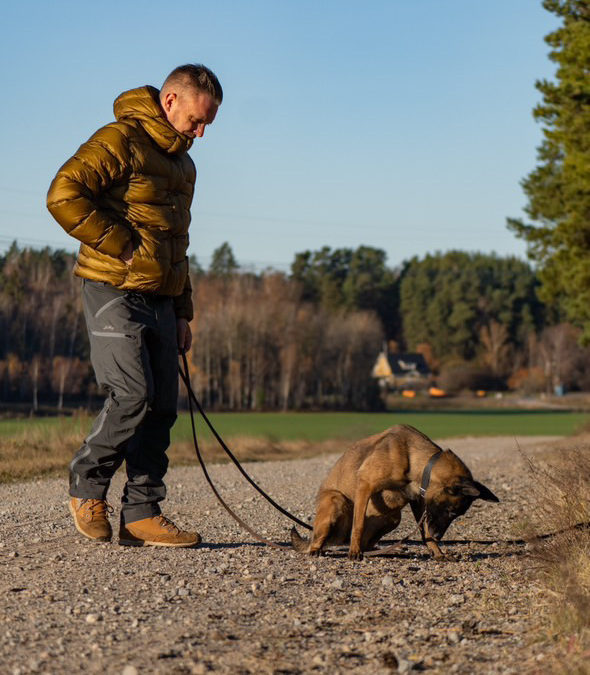
Dog training is as much an art as it is a science, requiring a balance of theory, observation, technical skills and the ability to adapt in the moment. Few people embody this holistic approach better than Tobias GUSTAVSSON. With over twenty years of full-time experience as a trainer and instructor, he has worked with police dog units, military special forces, search and rescue teams and government agencies around the world. Co-author of Tracking Dogs – Scents and Skills and co-founder of the Scandinavian Working Dog Institute, Tobias launched a new company, Gritty K9, alongside Boki DAMIS in 2022. specialising in tracking and olfactory detection, it is dedicated to training motivated, confident and highly qualified dog teams. We met him ahead of his speech at Cyno-Ops 2025 on the theme: “Tracking and detection dogs in anti-terrorism (CT) and counter-interference (CI) environments”.
1. How does working dogs in a CT environment differ from traditional detection missions?
It differs in many ways, from selecting the appropriate dog to the more specific challenges of basic training, and sometimes even how the dog will be deployed. The choice of a dog is not only based on characteristics influencing its learning abilities, but also on its size and appearance, in order to avoid it looking too much like a typical police or military dog. The counterterrorism environment can evolve very quickly, which means that the dog team must adapt to many different situations while remaining capable of ensuring high-level, precise and reliable detection and/or tracking.
2. Can you tell us which environments pose the greatest challenges for K9 teams and why?
The most difficult environments are those where the dog team must blend into the background and carry out detection and tracking missions without anyone noticing.
3. What is the role of electronic detection dogs?
There are several roles for electronic detection dogs. Everything from detecting digital storage devices in criminal investigations to detecting surveillance equipment in CI environments…
4. What mistakes can harm the handler/dog relationship and compromise efficiency during missions
A lack of regular training in different environments and situations, where dog and handler gradually learn to cooperate and trust each other through experience, can have a negative impact on their relationship.
Counter-terrorism and counter-intelligence at ground level: handlers and dogs working as one!
Dog training is as much an art as it is a science, requiring a balance of theory, observation, mechanical skills and the ability to adapt in the moment. Few people embody this holistic approach better than Tobias Gustavsson. With more than two decades of full-time experience as a trainer and instructor, he has worked with police K9 units, military special forces, search and rescue teams, and government agencies worldwide. A co-author of Tracking Dogs – Scents and Skills and co-founder of the Scandinavian Working Dog Institute, Tobias launched a new company, Gritty K9, in 2022 with Boki Damis. Specialising in tracking and scent detection, he is dedicated to building motivated, confident and highly skilled dog teams. We spoke with him ahead of his conference session at Cyno-Ops 2025 on “Tracking and Detection Dogs in the Counter-Terrorism (CT) and Counter-Intelligence (CI) Environment”.
1. How does the work of dogs in a CT environment differ from traditional detection missions?
It differs in many aspects, all the way from selecting the right dog to more specific challenges in the basic training and sometimes in the way the dog will be deployed. The dog might not only be selected based on traits that affect the trainability, but also based on size and looks, to avoid that the dog looks like a typical police or military dog. The CT environment can change rapidly and that means that the dog team has to adapt to many different situations and still be able to do focused and reliable high level detection and/or tracking.
2. Can you tell us which environments pose the most challenges for K9 teams and why?
The most difficult environments are those where the dog team has to blend in and do detection and tracking without anyone noticing it.
3. What is the role of electronic detection dogs?
There are several roles for electronic detection dogs. Everything from detection of digital storage devices in criminal investigations to detection of surveillance equipment in CI environments.
4. What mistakes can harm the handler-dog relationship and compromise effectiveness during missions?
A lack of consistent training in different environments and situations where the dog and handler eventually learn to cooperate and trust each other based on experience can negatively affect the handler-dog relationship.